
Our Instructors

Jessica Nobrega
B.Sc., E-RYT 500,YACEP. Owner of Grace & Flow Events and YSS. Yoga Science School Director and Master Trainer.
Jessica Nobrega holds a B.Sc. in biological sciences and an E-RYT 500 - the combination that shapes every module of this curriculum.
“It is no secret I want my students to work hard and to think deeply about their sacred purpose in this life - so that they can make an impact. We are regulating one nervous system at a time.“
Jessica Nobrega has spent her entire career at the intersection of science and communication. A biological sciences graduate from the University of Alberta, she spent more than a decade helping scientists make rigorous information land for real people in real rooms, first in environmental consulting and business development, then as Communications Manager at the Kelowna Chamber of Commerce, and for seven years as Chair of the Board of Directors of the Okanagan Science Centre.
She brought all of it to Yoga Science School when she took over as Director and Lead Trainer in 2021, reshaping a science-grounded curriculum into one that is also deeply engaging, honest about what the research actually says, and taught in a way that makes the science feel like something you have always wanted to know rather than something you have to get through.
Jessica also runs Grace & Flow, a yoga and wellness community in the Okanagan. She will tell you that her two kids are her most honest feedback system and that coming back to yoga after years of adrenal fatigue, anxiety, and a life that had gotten too fast, was not a spiritual awakening so much as a nervous system intervention that she is still grateful for every single day.
Christopher M. Bache, in his work on teaching and collective consciousness, writes that the most powerful classrooms generate something beyond information transfer. That the depth of a teacher's commitment to their subject creates a field of learning that students feel before they can name it. If you have ever walked out of a yoga class feeling like something shifted that you cannot quite explain, you already know what he means.
Jessica designs every moment of this training with that in mind. Students arrive expecting a curriculum. They tend to leave with something they were not expecting: a different relationship with their own body, a new understanding of why they have always been drawn to this practice, and a set of tools for their nervous system that they will use for the rest of their lives. Whether they ever teach a class or not.
If you have been practicing for years and still feel like there is a layer of understanding you have not reached yet, you are probably right. That is exactly where this training begins.
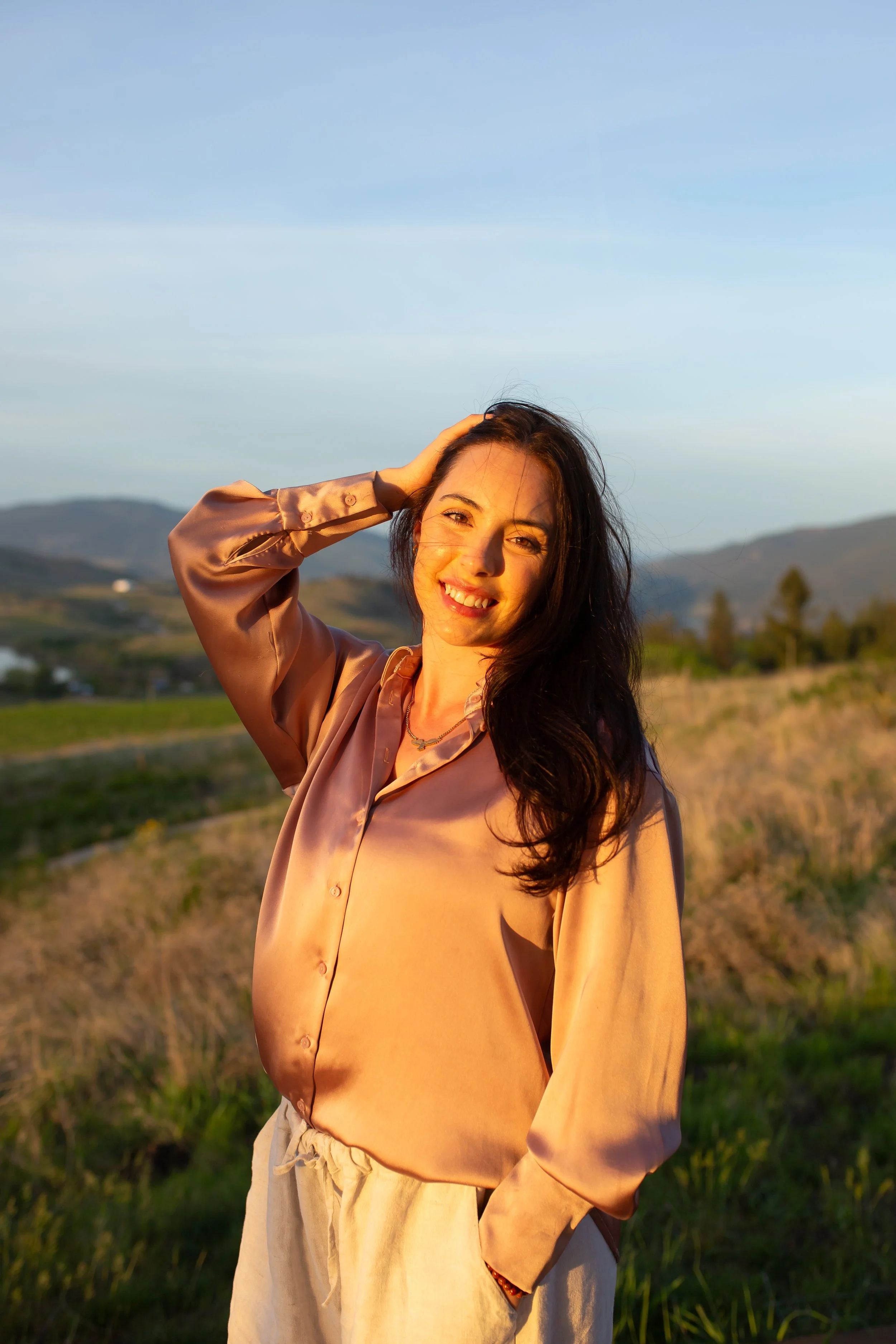
Josee Jarratt
MSW, B.Sc, RYT-500, YACEP
Josée holds a Master of Social Work and is a Registered Social Worker, a clinical foundation that informs her deep understanding of the nervous system and the inner workings of human resilience.
Josée’s path to yoga was forged through her own recovery. After a serious car accident limited her ability to dance, she found herself at a crossroads of physical limitation and emotional upheaval. Yoga became her intervention. Not as a performance, but as a practice of radical acceptance. It was here that she discovered that when we settle the body, we can finally hear what the soul is trying to say.
With over 500 hours of training and a career in clinical counselling, she is interested in what actually works for the human nervous system. Her teaching is a blend of psychology and somatic movement designed for the messy reality of being human. She focuses on the practicalities: how to use specific cues to build trust, how to regulate your own stress response while leading a class, inclusive language that bridges the gap between a student and teacher, and how to spot the subtle environmental triggers that can sometimes be overlooked.
In the 200-hour curriculum, Josée leads the modules on pose foundations, teaching methodology, and the science and importance of trauma-informed care. She is known for her feedback, the kind of honest, compassionate dialogue that helps students move past their self-doubt or hesitations and step into their own voice as teachers.